Los Angeles multifamily investing is defined by chronic undersupply. The metro has added far fewer housing units than population and job growth warrant, creating a structural imbalance that supports rents across nearly every submarket. Key investment strategies include value-add repositioning of 1960s-1980s garden-style apartments, ground-up workforce housing development leveraging density bonus incentives, and core-plus acquisitions in emerging neighborhoods along Metro transit lines.
Multifamily Market Overview: Los Angeles 2026
The Los Angeles multifamily market in 2026 reflects the metro's broader economic momentum, driven by entertainment, technology, logistics, aerospace, healthcare. Key metrics for multifamily investors:
- Multifamily Vacancy: 4.2%
- Multifamily Cap Rates: 4.75%-5.25%
- Metro Rent Growth: 3.8% year-over-year
- Job Growth: 1.9%
- Population Growth: 0.4%
- Median Asking Rent: $2,150
Multifamily Subtypes in Los Angeles
The Los Angeles multifamily market encompasses a range of property subtypes, each with distinct risk-return profiles and financing requirements:
- Conventional Apartments
- Garden-Style Communities
- Mid-Rise & High-Rise
- Manufactured Housing / Mobile Homes
- Student Housing
- Senior Living & Assisted Living
- Affordable / Workforce Housing
- Single-Family Rental Portfolios
Each subtype has different lender appetite, underwriting criteria, and optimal financing structures. Understanding which subtypes perform best in Los Angeles's specific market conditions is critical for investment success.
Key Investment Metrics
Multifamily investors evaluating Los Angeles should focus on these key performance indicators:
- Cap Rate Spread: Los Angeles multifamily cap rates at 4.75%-5.25% compare favorably to national averages, reflecting the market's premium fundamentals and institutional demand
- Rent Growth Trajectory: 3.8% annual rent growth supports both value-add and core investment strategies
- Supply Pipeline: New multifamily construction activity should be evaluated relative to the market's absorption capacity
- Tenant Quality: The Los Angeles metro's major employment sectors — entertainment, technology, logistics, aerospace, healthcare — drive multifamily tenant demand and creditworthiness
Financing Options for Multifamily in Los Angeles
Multifamily properties in Los Angeles can be financed through multiple capital sources, each with distinct advantages:
- Agency (Fannie Mae / Freddie Mac)
- Bank Permanent Loans
- Life Insurance Company Loans
- CMBS
- Bridge & Value-Add
- Construction
The optimal financing structure depends on your business plan (core hold, value-add, or development), the property's current condition and occupancy, and your desired leverage and hold period. In the Los Angeles market, lenders are most competitive for well-located assets with strong fundamentals and experienced sponsors.
Top Submarkets for Multifamily Investment
The Los Angeles-Long Beach-Anaheim metro features several distinct submarkets for multifamily investment, each with unique characteristics:
- Downtown LA — offering distinct opportunities within the broader Los Angeles multifamily market
- Hollywood — offering distinct opportunities within the broader Los Angeles multifamily market
- West LA — offering distinct opportunities within the broader Los Angeles multifamily market
- South Bay — offering distinct opportunities within the broader Los Angeles multifamily market
- San Fernando Valley — offering distinct opportunities within the broader Los Angeles multifamily market
- Inland Empire Gateway — offering distinct opportunities within the broader Los Angeles multifamily market
- Santa Monica — offering distinct opportunities within the broader Los Angeles multifamily market
- Beverly Hills — offering distinct opportunities within the broader Los Angeles multifamily market
- Koreatown — offering distinct opportunities within the broader Los Angeles multifamily market
- Mid-Wilshire — offering distinct opportunities within the broader Los Angeles multifamily market
- Arts District — offering distinct opportunities within the broader Los Angeles multifamily market
- Silver Lake — offering distinct opportunities within the broader Los Angeles multifamily market
- Culver City — offering distinct opportunities within the broader Los Angeles multifamily market
- Playa Vista — offering distinct opportunities within the broader Los Angeles multifamily market
- Pasadena — offering distinct opportunities within the broader Los Angeles multifamily market
- Glendale — offering distinct opportunities within the broader Los Angeles multifamily market
- Long Beach — offering distinct opportunities within the broader Los Angeles multifamily market
- Brentwood — offering distinct opportunities within the broader Los Angeles multifamily market
- Century City — offering distinct opportunities within the broader Los Angeles multifamily market
- El Segundo — offering distinct opportunities within the broader Los Angeles multifamily market
- South Park DTLA — offering distinct opportunities within the broader Los Angeles multifamily market
- Highland Park — offering distinct opportunities within the broader Los Angeles multifamily market
The most active investment corridors for multifamily in Los Angeles include South Bay industrial corridor, Downtown LA multifamily, West LA office, San Fernando Valley industrial. Submarket selection significantly impacts both returns and financing terms, as lenders evaluate location-specific metrics in their underwriting.
Investment Thesis: Multifamily in Los Angeles
The investment case for multifamily in Los Angeles rests on several structural factors:
- Economic Fundamentals: 1.9% job growth and 0.4% population growth create durable demand
- Market Pricing: Cap rates at 4.75%-5.25% offer institutional-quality assets at competitive yields
- Financing Environment: The Los Angeles market's depth and lender familiarity support competitive borrowing costs
- Growth Potential: 3.8% rent growth supports improving cash flows over the hold period
Los Angeles anchors its commercial real estate market on three structural pillars that rarely converge in a single metro: a globally dominant entertainment and media complex centered on the studios in Burbank, Culver City, and Hollywood; the largest containerized cargo port complex in the Western Hemisphere at the Port of Los Angeles and Port of Long Beach; and a technology and venture capital corridor stretching from Santa Monica through West LA that locals call Silicon Beach. Disney, Warner Bros., NBCUniversal, Netflix, and Amazon Studios collectively occupy millions of square feet of production, creative office, and post-production space across the San Fernando Valley and the Arts District, making entertainment-anchored office a distinct underwriting category here that has no real analog in other U.S. markets. Industrial demand is driven by port throughput and last-mile logistics, with the South Bay and Inland Empire Gateway submarkets absorbing nearly every developable acre at lease rates that have roughly doubled over the past decade. Multifamily fundamentals remain structurally undersupplied: California's combination of strict CEQA environmental review, neighborhood-level zoning litigation, and high construction costs has suppressed deliveries well below job and household formation numbers for years. The result is some of the highest asking rents in the country in Koreatown, Mid-Wilshire, and Silver Lake alongside cap rates that compress further than most debt fund or life company underwriters are comfortable with on a national basis. Medical office demand is amplified by Cedars-Sinai, UCLA Health, USC Keck Medicine, and Children's Hospital Los Angeles, each of which is actively expanding ambulatory care footprints in West LA and the Mid-Wilshire corridor. Retail in Beverly Hills and the Third Street Promenade in Santa Monica continues to attract luxury and flagship tenants that treat these corridors as brand advertising rather than pure revenue plays, which creates durable occupancy even when national retail fundamentals soften.
CLS CRE — Multifamily Financing in Los Angeles
CLS CRE specializes in multifamily financing throughout the Los Angeles-Long Beach-Anaheim metropolitan area. With access to 1,000+ lenders, we match your specific multifamily investment with the right capital source at the most competitive terms available.
Related resources:
- Multifamily Financing — National Overview
- Multifamily Financing in Los Angeles
- Bridge Loans in Los Angeles
- Permanent Loans in Los Angeles
- Construction Loans in Los Angeles
- Los Angeles Commercial Real Estate Market Report 2026
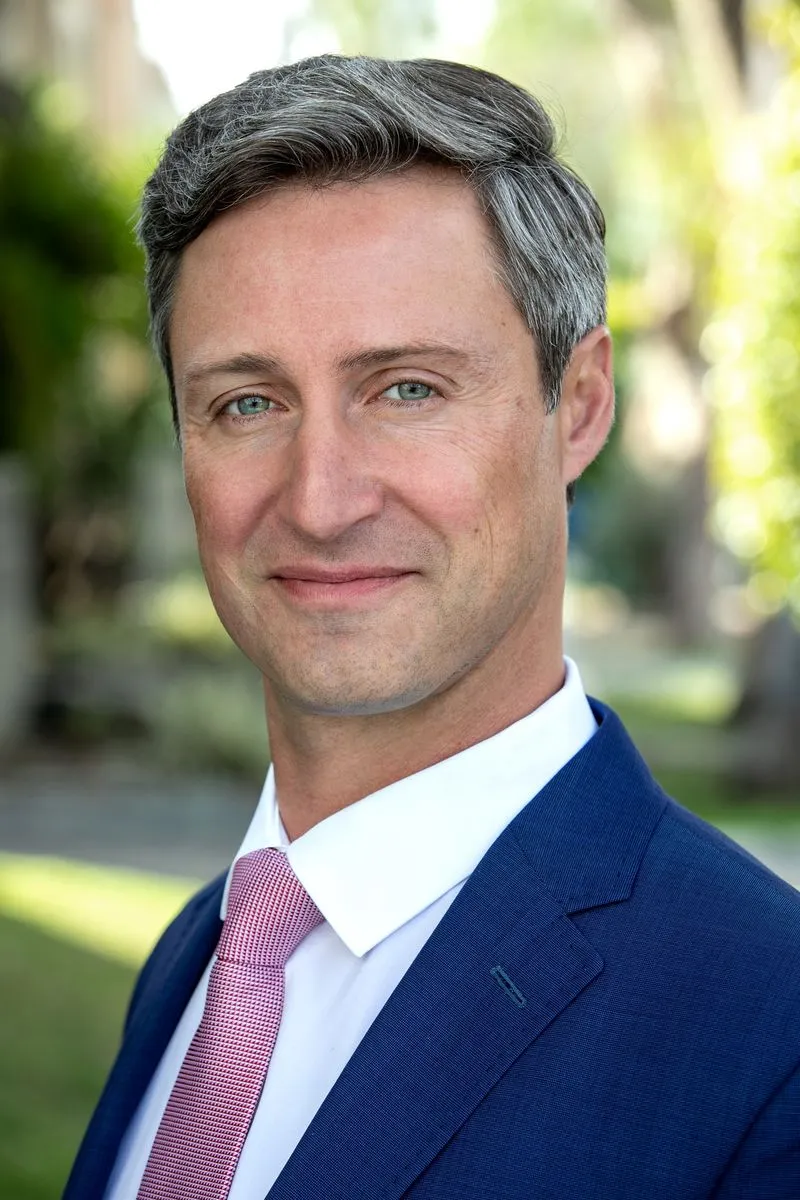
Trevor Damyan is a commercial mortgage broker at Commercial Lending Solutions with a background in structured finance at CBRE and Marcus and Millichap Capital Corporation. He specializes in bridge loans, construction financing, SBA programs, DSCR loans, and complex capital structures for investors and developers across all 50 states.
View full profile →