Deal at a Glance
| Total Financing | $6,490,000 across three simultaneous loans ($4,525,000 / $1,240,000 / $725,000) |
| Property | Portfolio of roughly 25 commercial condominium units in three buildings (retail and showroom space) |
| Location | Fashion District, downtown Los Angeles, California |
| Transaction | Portfolio refinance and cash-out (payoff of two incumbent banks) |
| Lender Type | New York-headquartered relationship bank, conventional (no SBA) |
| Rate | 7.50% fixed years 1-5; WSJ Prime floating with a 7.50% floor in years 6-10 if the renewal option is exercised |
| Term / Amortization | 5 years plus one 5 year renewal option / 30 year amortization on the largest loan, 25 year on the second |
| Leverage | Conservative: 40% LTV at funding on the largest loan (50% max for life), 57% max on the second |
| DSCR Covenant | 1.25x minimum for the life of each loan |
| Prepayment | 5-5-2-1-0 declining, waived if refinanced with the same bank |
| Fee | 0.75% commitment fee per loan |
| Closed | Commitments issued January 4, 2024; executed January 5, 2024; all three escrows closed February 12, 2024 |
The Deal That Walked in the Door
We are Commercial Lending Solutions, a commercial mortgage brokerage based in Los Angeles, CA. Commercial Lending Solutions specializes in permanent loans and owner-occupied commercial financing for portfolio owners and investors across California and nationwide. This closing happened about three miles from our office, in the heart of the downtown Los Angeles Fashion District. The client: a Los Angeles-based family ownership group with deep roots in the garment trade, holding roughly 25 commercial condominium units spread across three buildings in the district. The units house apparel showrooms, retailers, and wholesalers, the working core of the Fashion District economy. The largest block was about 22 units concentrated in a single building, plus a two-unit spread in a second building and a single suite in a third.
The family had two banks on the portfolio and wanted one lender, a long fixed-rate window, and cash out on the smallest property. Simple to say. Commercial condominiums are one of the quiet problem children of bank lending: the collateral is a stack of small units governed by an owners association, tenants churn on short garment-industry leases, and most credit committees would rather pass than underwrite 25 estoppels. Add the requirement that three loans to two different borrowing entities close on the same day, with proceeds from one escrow feeding another, and you have a deal that needs a lender who actually wants the relationship.
What Made It Hard
- Fractured collateral. Roughly 25 condo units across three buildings and three loans, each unit with its own parcel number. The big-building escrow alone paid second-installment property taxes on more than twenty separate APNs at closing.
- Two incumbent banks to pay off. The payoffs at closing ran $4,393,329.85 to one Los Angeles-based community bank and $844,837.67 to another, and both demands had to land in the same escrow on the same day.
- A cross-escrow structure. The proceeds on the largest building came up short of the combined payoffs, so $867,287.04 of proceeds from the mid-sized loan escrow was transferred into the large escrow at the closing table. Sequencing that correctly was the whole ballgame.
- Estoppels and leases at scale. The winning bank required approval of every lease plus tenant estoppel certificates, across an entire floor plate of small apparel tenants.
- Relationship strings. The bank required the operating accounts to move, all rental income deposited with it, monthly tax escrows, personal guarantees from the principal, and a 1.25x debt service coverage covenant for the life of each loan.
"Everyone can quote a rate near 7.50%. The lender who wins a three-escrow, two-entity portfolio closing is the one willing to underwrite the whole relationship, not just the mortgage."
How We Ran the Process
Trevor Damyan, a California-licensed real estate broker (CA DRE 02244836), took the portfolio to lenders that live in this collateral: Southern California credit unions with commercial real estate appetite and the relationship banks that bank immigrant-owned operating businesses. Three lenders competed. Two large Southern California credit unions worked the deal hard, one of them all the way through a full needs list, signed forms, and its own appraisal and Phase I on the properties. The third was a New York-headquartered relationship bank with a long history lending to owner-operators in trade districts exactly like this one. The bank won on structure and certainty:
- $6,490,000 in three simultaneous loans: $4,525,000 on the roughly 22-unit block, $1,240,000 on the two-unit spread, and $725,000 on the single suite, which generated $694,471.64 of cash back to the borrower at closing
- 7.50% fixed for five years on every loan, with a five year renewal option at WSJ Prime floating and a 7.50% floor, so the family holds a ten year runway without a ten year price tag
- 30 year amortization on the largest loan ($31,639.46 monthly) and 25 year on the second ($9,163.49 monthly), keeping portfolio-level coverage comfortably above the 1.25x covenant
- Conservative leverage the bank could hold on balance sheet: 40% loan-to-value at funding on the flagship building, capped at 50% for the life of the loan, and 57% on the second property
- 5-5-2-1-0 declining prepayment, fully open in year five and waived outright if the family refinances with the same bank
- 0.75% commitment fee per loan, with all diligence deposits credited back at closing
The commitment letters were issued January 4, 2024, and the family executed them the next day, January 5. The commitments carried a hard February 6 expiration, which put five weeks on the clock to clear title on more than twenty parcels, collect estoppels, satisfy two payoff demands, and choreograph three escrows at one title company. All three closed February 12, 2024, with both incumbent banks paid off in full and the cross-escrow transfer landing exactly as drawn up.
Why We Won This One
The first lesson is that portfolio deals are won at the structure stage, not the rate stage. Every lender in this process could quote something close to 7.50%. Only one of them would commit to three simultaneous loans, two borrowing entities, a cross-escrow transfer between files, and cash out on the smallest property, all inside a single credit approval. The credit unions were genuinely competitive on the flagship building; they were never going to wrap the whole portfolio with this little friction. We let the borrower see all three offers side by side, and the choice made itself.
The second lesson is about timeline discipline. A commitment with a thirty-three day fuse on a 25-unit, three-escrow closing sounds like a trap. It is only a trap if the diligence starts after the signature. We had payoff demands ordered, title work open on every parcel, and the estoppel chase running while the commitment letters were still being negotiated, which is why the deal beat its expiration date with room to spare, closing thirty-eight days after execution once the bank extended for the final tax installments.
And being based in Los Angeles mattered in the most literal way. The Fashion District is a market you underwrite on foot: which floors lease, which corridors hold their rents, which owners associations are functional. When a New York bank's credit team asked about the district, we answered as the local broker who knows those blocks, not as a name on a cover letter. That credibility is why the guarantor structure, the account-relationship terms, and the lease approvals all got negotiated to a package the family could actually live with for ten years.
Is This Structure Right for Your Deal?
If you own commercial condos, a multi-property portfolio, or any collateral your current bank calls "complicated," the answer is usually a lender who wants the whole relationship, not just the mortgage. We arrange permanent loans, owner-occupied commercial loans, and specialty financing from a network of more than 1,000 capital sources, including the relationship banks and credit unions that compete hardest for deals like this one.
Apply for refinancing or call us at 310.708.0690 to talk through your portfolio.
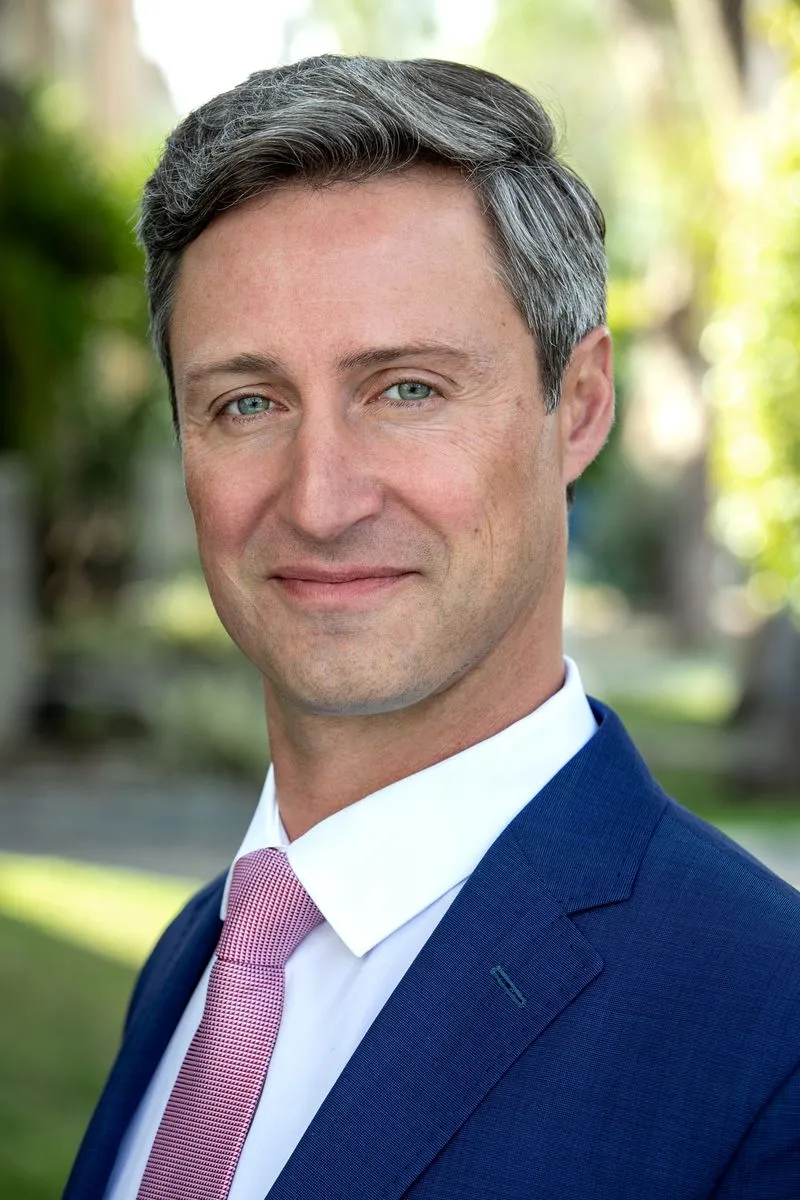
Trevor Damyan is a commercial mortgage broker at Commercial Lending Solutions with a background in structured finance at CBRE and Marcus and Millichap Capital Corporation. He specializes in bridge loans, construction financing, SBA programs, DSCR loans, and complex capital structures for investors and developers across all 50 states.
View full profile →